
Both 6061 and 6082 are heat-treatable aluminum alloy from the 6000 series, offering good strength, excellent corrosion resistance, and outstanding machinability. They are widely used in structural engineering, machinery manufacturing, transportation, marine, and construction industries.
Compared to 6061 aluminum, 6082 has higher mechanical strength, especially in the T6 temper, making it ideal for structural components that require greater load-bearing capacity. However, 6082 has slightly lower weldability than 6061, and in complex structures or thin-wall welding applications, additional process control may be required to prevent hot cracking.
Different Tempers
| Alloy | Common Tempers |
| 6061 aluminum | T6, T651, T4, O, T42, T62, T6511 |
| 6082 aluminum | T6, T651, T4, O |
6061-T6 is one of the most commonly used heat-treated tempers of 6061 aluminum alloy. It is obtained through solution heat treatment followed by artificial aging. This temper offers a good balance of strength, corrosion resistance, and machinability, making it widely used in structural components and the aerospace industry.
6061-T651 is a stress-relieved version of T6. After heat treatment, the material is stretched to reduce residual internal stresses, improving dimensional stability. It is ideal for high-precision machining applications.
6082-T6 is the standard high-strength temper of 6082 aluminum alloy, produced by solution treatment and artificial aging. With higher strength than 6061-T6, it is widely used in structural engineering such as bridges, cranes, and transportation equipment.
6082-T651 is the stress-relieved version of 6082-T6, offering better stability and reduced risk of deformation during machining. It is especially suitable for large or high-precision components.
Different Chemical Compositions
| Element | 6061 | 6082 |
| Aluminium (Al) | 95.85 – 98.56% | 95.2 – 98.3% |
| Magnesium (Mg) | 0.80 – 1.20% | 0.60 – 1.20% |
| Silicon (Si) | 0.40 – 0.80% | 0.70 – 1.30% |
| Iron (Fe) | ≤ 0.70% | ≤ 0.50% |
| Copper (Cu) | 0.15 – 0.40% | ≤ 0.10% |
| Chromium (Cr) | 0.04 – 0.35% | ≤ 0.25% |
| Zinc (Zn) | ≤ 0.25% | ≤ 0.20% |
| Titanium (Ti) | ≤ 0.15% | ≤ 0.10% |
| Manganese (Mn) | ≤ 0.15% | 0.40 – 1.00% |
| Others (Total) | ≤ 0.15% (≤ 0.05 each) | ≤ 0.15% (≤ 0.05 each) |
6061 vs 6082 Aluminum Properties
| Properties | 6061 Aluminum | 6082 Aluminum |
| Tensile Strength | Ultimate tensile strength is approximately 340 MPa, suitable for medium-strength structural components. | Around 410 MPa, offering higher strength for heavy-load applications. |
| Yield Strength | Approximately 320 MPa, providing a good balance of strength and ductility, ideal for general structural use. | About 370 MPa, capable of withstanding higher stresses before deformation, suited for heavy-duty scenarios. |
| Shear Strength | Shear strength ranges from 84–210 MPa, adequate for most moderate shear load applications. | Slightly higher shear strength, around 84–220 MPa, better for structures under greater shear force. |
| Elastic Modulus | Both have an elastic modulus of approximately 69 GPa, offering similar stiffness and elastic behavior. | |
| Fatigue Strength | Fatigue strength is about 58–110 MPa, suitable for moderate cyclic stress applications. | Slightly higher, at 55–130 MPa, better for frequently loaded structures. |
| Elongation at Break | Ranges from 3.4% to 20%, allowing easy forming of complex shapes. | Around 6.3% to 18%, with slightly lower ductility but still good formability. |
- In summary, 6082 aluminum generally surpasses 6061 aluminum in tensile strength, yield strength, shear strength, and fatigue resistance, making it ideal for high-stress and heavy-load applications. On the other hand, 6061 aluminum offers better ductility and machinability, making it widely used where ease of processing and forming is critical. Both alloys share similar stiffness and density, making them suitable for lightweight structural applications.
Corrosion Resistance Differences
- 6061 aluminum alloy offers good corrosion resistance, especially after welding, maintaining stable protective properties. It performs well in various typical environments such as marine structures, piping systems, and outdoor frameworks. It is particularly effective under general industrial and coastal atmospheric conditions.
- 6082 aluminum alloy demonstrates better resistance to stress corrosion, thanks to its higher manganese content. It is especially suitable for long-term load-bearing applications in high-moisture, high-salt environments such as bridges, railways, and heavy-duty structural components.
Weldability Differences
- 6061 aluminum alloy offers excellent weldability and is one of the most welding-friendly materials in the 6000 series. Its heat-affected zone remains structurally stable during welding, with minimal loss of weld strength. It is compatible with various welding methods such as TIG and MIG, making it widely used in welded structures like frames, marine components, and automotive parts.
- In comparison, 6082 aluminum alloy is also weldable but has a slightly higher sensitivity to hot cracking due to its higher silicon and manganese content. Its mechanical properties tend to degrade more noticeably after welding. Therefore, 6082 is better suited for applications with limited welding or those where post-weld heat treatment can be applied to restore strength.
Comparison of Machinability
- 6061 aluminum is highly regarded for its excellent machinability. It can be easily cut, drilled, and formed using standard machinery and general-purpose lubricants. Its characteristics allow for high-speed machining, tight tolerances, and fine surface finishes, making it a popular choice across industries such as automotive, aerospace, and general engineering.
- 6082 aluminum, while still machinable, poses greater challenges due to its higher strength and hardness. Machining 6082 requires specialized lubricants and equipment to handle its increased hardness, which leads to higher tool wear and necessitates reduced cutting speeds. In contrast, 6061 can typically be processed with standard machines and lubricants, reducing costs and increasing manufacturing flexibility.
- When machining 6082 aluminum, high-quality cutting tools made from materials like carbide are recommended, along with appropriate cooling and lubrication techniques to manage the heat generated during processing. The choice of lubricant is critical for both 6061 and 6082. For 6061, general-purpose lubricants usually provide sufficient cooling and lubrication to ensure smooth machining and a good surface finish. In comparison, machining 6082 requires advanced lubricants with superior cooling and lubricating properties to handle the higher heat levels effectively.
Applications Differences
| Alloy | 6061 aluminum alloy | 6082 aluminum alloy |
| Application |
|
|
| Advantage | 6061 offers excellent weldability and is well-suited for complex structural designs and machining needs, making it ideal for versatile engineering applications. | With higher strength, 6082 is better suited for load-bearing and high-stress structures, and is widely used in European construction and transportation engineering projects. |
HSTF 6061 and 6082 Aluminum Bar Products
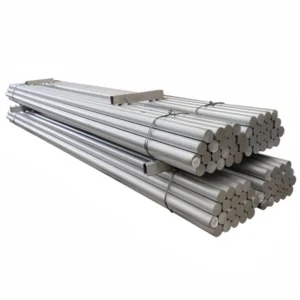
6000 Series Bar
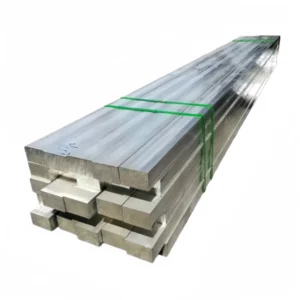
6000 Series Bar
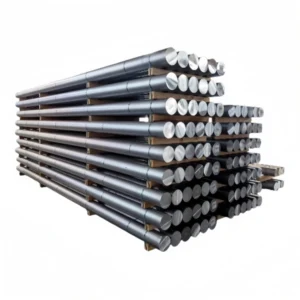
6000 Series Bar
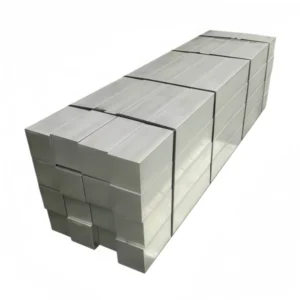
6000 Series Bar
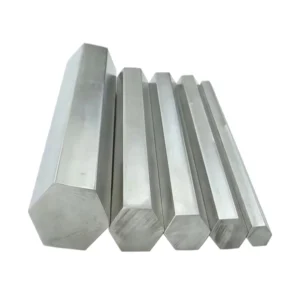
6000 Series Bar
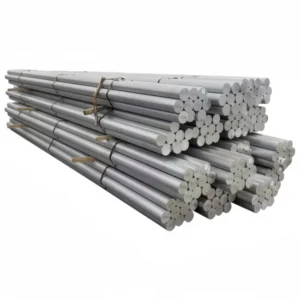
6000 Series Bar
About Us
Shandong Hesheng Taifu Aluminum Group Co., Ltd. is a leading aluminum bar producer and exporter in China, and has been recognized as a “China Integrity Enterprise” for many consecutive years. We specialize in the production, processing, and trading of aluminum rods. With over 18 years of experience in the aluminum industry, we can provide a full range of high-quality aluminum rods at competitive prices.