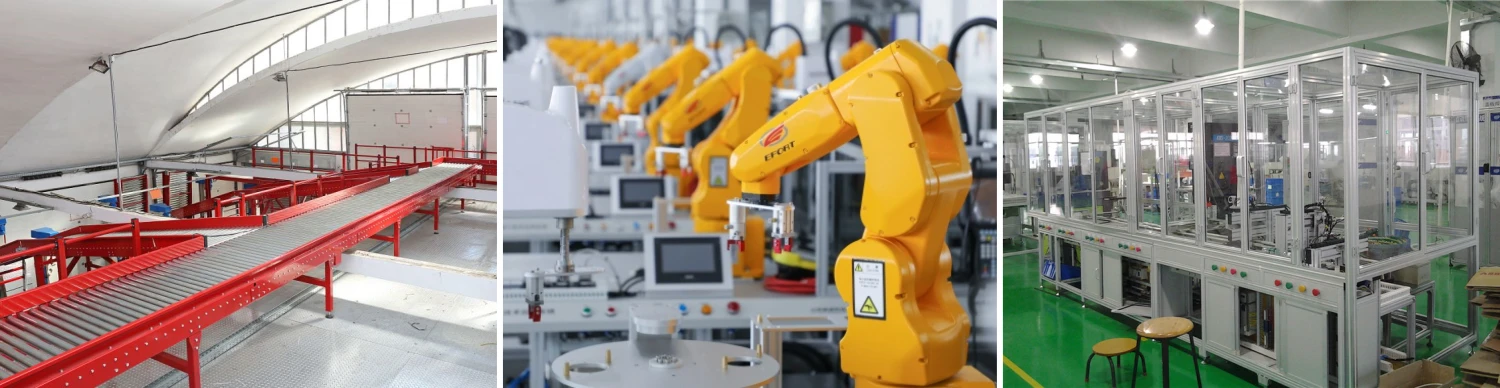
Aluminum alloys are widely used in the machinery manufacturing industry, primarily for manufacturing various transmission components, structural parts, and precision parts. Through machining methods such as turning and milling, aluminum bars can be processed into general-purpose mechanical parts such as gears, bushings, connecting rods, and bolts. In precision machinery, they are used to manufacture precision parts such as instrument pointers and micro-motor shafts. Furthermore, aluminum alloy bars are widely used in medical devices, machine tool accessories, and heat sinks for electronic equipment. With their lightweight, high strength, corrosion resistance, and excellent machinability, they have become an indispensable basic material in modern machinery manufacturing.

The lightweight properties of aluminum alloys are particularly important in the fields of machinery and automation, as weight reduction can improve operating efficiency and reduce energy consumption. Lighter components can increase movement speed, reduce wear on mechanical systems, and ultimately improve production efficiency.
Aluminum Alloy General Mechanical Parts Manufacturers and Suppliers

General Mechanical Parts

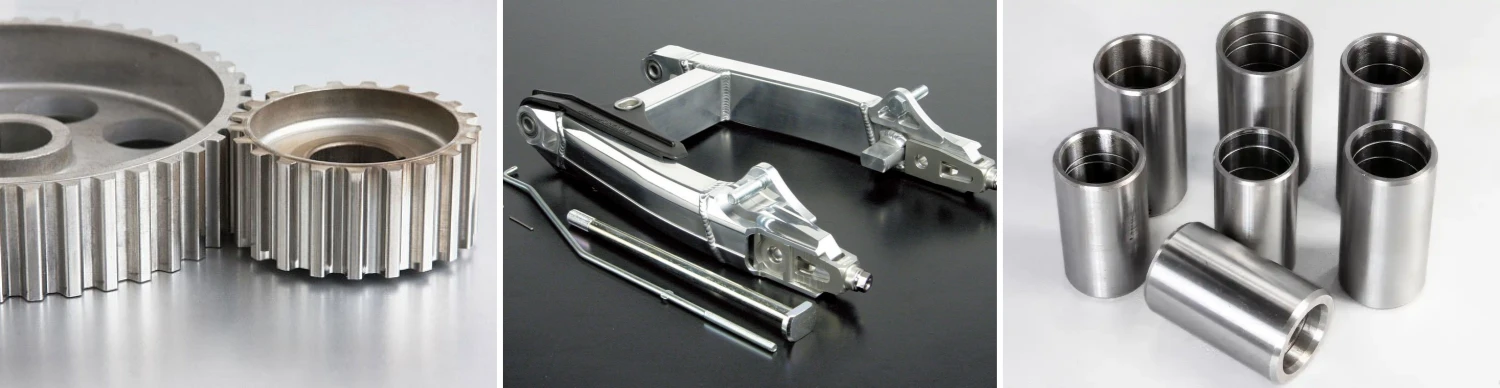
Aluminum alloy bars are widely used in general mechanical parts, primarily for manufacturing gears, bushings, connecting rods, instrument pointers, and other transmission and precision components. Their core characteristics are lightweight yet high strength (density only 1/3 that of steel), excellent machinability (high cutting speed, low tool wear), good corrosion resistance (natural oxide film formation on the surface), and good thermal and electrical conductivity.

Small-sized, high-precision aluminum bars (5-20mm in diameter) are used to manufacture core components for precision instruments. Through precision turning and grinding, dimensional tolerances can be controlled within ±0.05mm, and surface roughness Ra≤0.4μm. Grades such as 6061 and 6063 have good machinability, minimal deformation after machining, and are suitable for mass production.

  • 6061-T6 and 6063-T6 are suitable for light-load transmission and precision parts.
  • 7075-T6 is used for heavy-duty components requiring high strength.
  • 5052 and 5083 are used for medical devices and marine parts requiring high corrosion resistance.

Through proper material selection and heat treatment, aluminum alloy bars can meet the performance requirements of different working conditions, achieving lightweighting and cost optimization.
Aluminum Alloy Connections and Fasteners Manufacturers and Suppliers

Aluminum Connections and Fasteners

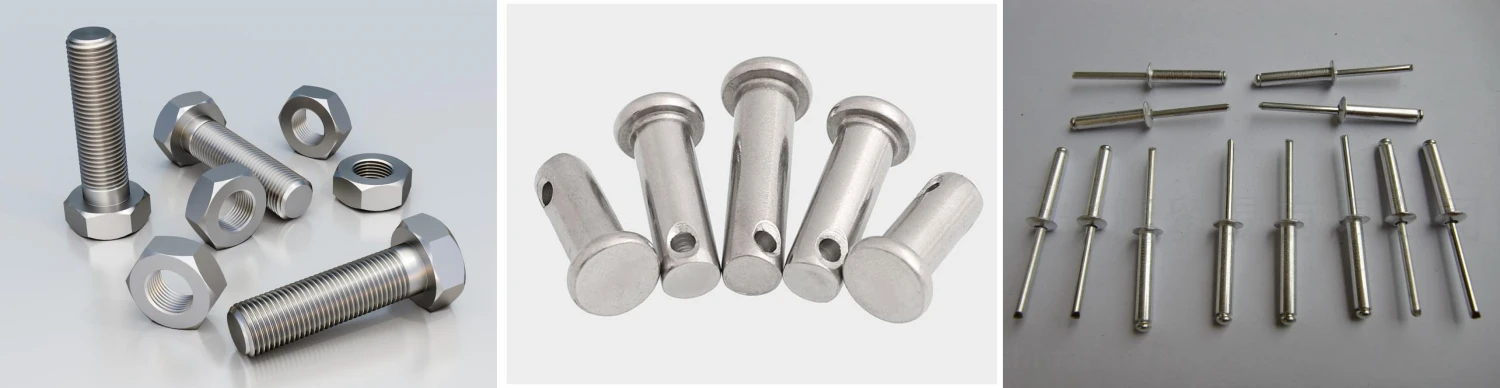
  • Aluminum bolts are primarily used for non-load-bearing structural connections, such as fixing equipment housings, installing decorative parts, and assembling instruments. Compared to steel bolts, aluminum bolts can reduce weight by approximately 65%, effectively lowering the overall weight of equipment. They are particularly suitable for weight-sensitive fields such as aerospace, electronic equipment, and medical devices. Grades such as 5052 and 6061 have good ductility and machinability, resulting in high-quality thread forming and reducing the likelihood of cracking.
  • Aluminum pins are used for positioning and connecting parts, and are widely used in fixtures, molds, and automated equipment. After tempering, 6061-T6 aluminum can achieve a hardness of HB95 or higher, a tensile strength ≥310MPa, and can withstand shear loads. The positioning pins use an interference fit, with a fit accuracy of H7/k6, ensuring a repeatability accuracy within 0.02mm.
  • Aluminum rivets are primarily used for joining thin plates and are widely used in the housings of aerospace, automotive, and electronic equipment. Grades such as 2A10 and 2A11 exhibit good plasticity and riveting properties, resulting in minimal deformation after riveting and reliable connections. Cold heading forming ensures high production efficiency and low cost.
Aluminum Alloy Machine Tool Accessories and Tooling Fixtures

Machine Tool Accessories and Tooling Fixtures

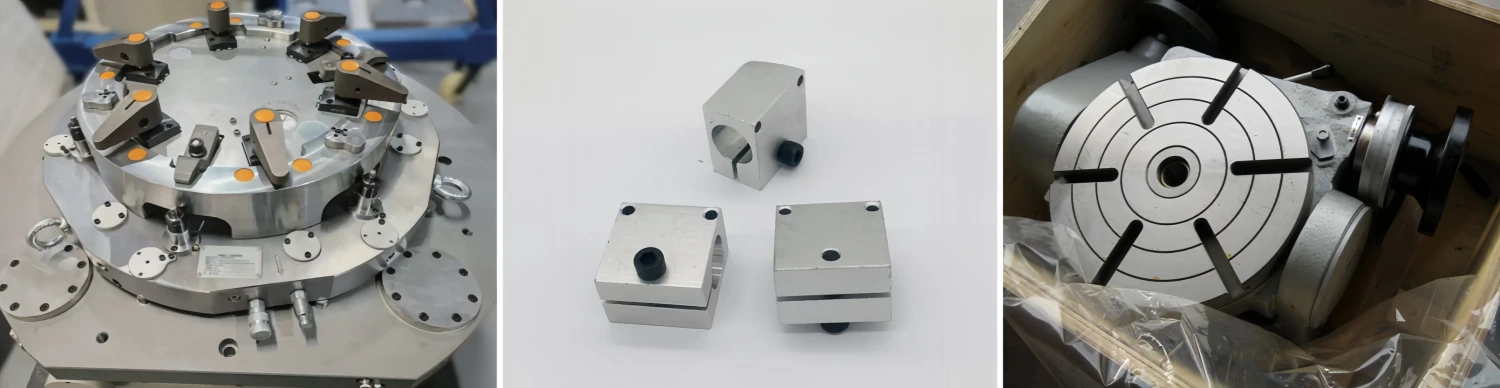
  • Aluminum tooling fixtures are used to hold workpieces in place, ensuring positioning accuracy during machining. High-strength aluminum alloys such as 6061-T6 and 7075-T6, after precision machining, can withstand cutting forces while remaining lightweight, making them easy to handle and replace. Structural designs such as T-slots and locating pin holes enable rapid clamping and repeated positioning.
  • Aluminum positioning blocks are used to determine the machining reference for the workpiece, while support blocks are used to prevent workpiece deformation. Grades such as 6063 and 6082 have good machinability, stable dimensions after machining, and can undergo hard anodizing treatment to improve wear resistance and service life.
  • The aluminum indexing plate is used for multi-angle machining of workpieces, while the rotary table is used for circumferential indexing. After precision machining, the 7075-T6 achieves an indexing accuracy of ±5 arcseconds and a repeatability of ±2 arcseconds. The surface undergoes hard anodizing treatment, achieving a hardness of HV400-600, providing excellent wear resistance.
Aluminum Alloy for Automated System Architecture Framework - China Professional Aluminum Alloy Bar Rod Supplier

Automated System Architecture Framework

  • Automated equipment such as robotic arms and robot workstations require lightweight yet high-strength frame structures. High-strength aluminum alloys such as 7075-T6 are used to manufacture robot skeletons, while 6061-T6 is used for protective covers and fences. Aluminum alloy frames not only withstand dynamic loads but also effectively isolate the equipment’s operating area, ensuring production safety.
  • Aluminum alloy profiles are a fundamental material for building automated production lines, used to construct conveyor line supports, assembly line frames, workbenches, and more. 6061-T6 and 6063-T5 find common use as grades, enabling rapid assembly via T-slots and specialized connectors, supporting quick adjustments and upgrades to the production line. For example, aluminum alloy frame structures see extensive use in welding production lines in automobile manufacturing and electronic assembly lines.
  • In high-precision applications such as semiconductor testing equipment, medical instruments, and laboratory equipment, aluminum alloy frames provide a stable mounting platform. The 6061-T6 features excellent dimensional stability and vibration resistance, and through precision machining, it achieves a positioning accuracy of ±0.01mm, ensuring long-term stable operation of the equipment.

Common Alloy Comparison

Alloy

Alloy Series

Tensile Strength (MPa) Yield Strength (MPa) Hardness (HB)

Strength Grade

7075-T6

Al-Zn-Mg-Cu ≥ 560 ≥ 495 150 Ultra-high strength
6082-T6 Al-Mg-Si ≥ 310 ≥ 260 90

High strength

6061-T6

Al-Mg-Si 290-310 240-270 95 Medium-high strength
5083 Al-Mg ≥ 270 ≥ 110

Medium strength

6063-T6

Al-Mg-Si ≥ 205 ≥ 180 75 Medium strength
5052 Al-Mg 173-244 ≥ 70

Low-medium strength

Performance Indicator

7075 6082 6061 6063 5083

5052

Machinability

Very Good Good Excellent Excellent Good Good
Weldability Poor Excellent Excellent Excellent Excellent

Excellent

Extrudability

Fair Good Good Excellent Good Good
Cuttability Very Good Good Excellent Good Good

Fair

Formability

Poor Good Fair Good Good

Excellent

Selection Recommendations

  • High-Strength Structural Parts: 7075 (Ultra-high strength), 6082 (High strength + corrosion resistance)
  • General Structural Parts: 6061 (Best all-around performance), 6082 (Better weldability)
  • Architectural Profiles: 6063 (Excellent surface treatment performance)
  • Welded Structures: 5083 (Best weldability), 6082 (Weldability + corrosion resistance)
  • Sheet Metal Forming: 5052 (Excellent formability), 5083 (Weldability + strength)
  • CNC Precision Machining: 6061 (Good machinability), 7075 (High hardness, wear resistance)

About Us – High Quality Aluminium Supplier

HSTF is a leading aluminium alloy bar producer and supplier in China. We specialize in the production, processing, and trading of aluminum rods. With over 18 years of experience in the aluminum industry, we can provide a full range of high-quality aluminum rods at competitive prices.

  • Advanced digital equipment and mature heat treatment and rolling processes guarantee product consistency and high performance.
  • We can customize grades and specifications according to customer needs, ensuring fast delivery and shortening project cycles.
  • We provide expert consultation on material selection and application, simplifying the entire project process for our clients.
  • From quotation, production, and logistics to after-sales support, we offer seamless service, saving our clients time and effort.
  • Experience collaborating with more than 20 global machinery manufacturing companies.